
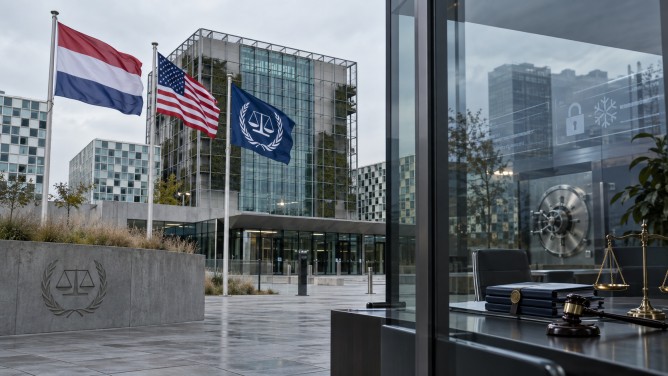
The Netherlands is gearing up to counter potential new U.S. sanctions against the International Criminal Court (ICC), as tensions continue to rise between Washington and the tribunal. Dutch authorities are considering strategies to ensure the ICC’s operations remain unaffected, focusing on maintaining staff salaries, safeguarding witnesses, and preserving detention facilities should the sanctions disrupt the court’s access to financial services.
This development follows the Trump administration’s sanctions on various ICC officials, including judges, prompted by investigations involving U.S. and Israeli entities that Washington claims overstep the court’s jurisdiction. The proposed sanctions may extend beyond individuals to encompass the ICC as a whole, potentially hindering transactions with U.S. companies and affecting the court’s banking, insurance, and technological operations.
In anticipation of broader sanctions, the ICC has already begun shifting some services away from U.S.-based providers and is reassessing its financial and technological frameworks. The Netherlands, hosting the court since its establishment in The Hague in 2002, has initiated discussions on mitigating the sanctions’ potential impact, emphasizing its commitment to supporting the ICC’s mandate.
The ICC, tasked with prosecuting individuals for genocide, crimes against humanity, war crimes, and aggression when national systems falter, faces a challenging path as it navigates these geopolitical pressures. The potential sanctions could significantly hamper its ability to function, underscoring the critical role of international support, particularly from host nations like the Netherlands, in sustaining its judicial operations.