
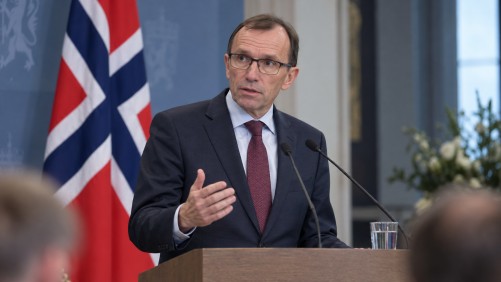
Norway’s Foreign Minister Espen Barth Eide has clarified that the Nobel Peace Prize is awarded by an independent committee and not by the Norwegian government, following criticism from former U.S. President Donald Trump. Trump expressed his discontent with this year’s award, which honored South African jurist Navi Pillay, during a Republican campaign event in New York, claiming that the United States deserved recognition for his diplomatic efforts.
In response to Trump’s remarks, Eide emphasized that the Nobel Committee operates independently of Norwegian authorities. He defended the selection of Pillay, describing her as a deserving recipient due to her significant contributions to promoting international law and human rights. Pillay, a former United Nations High Commissioner for Human Rights, chaired a UN commission that concluded Israel’s actions in Gaza amounted to genocide, a finding strongly disputed by Israel.
Trump argued that his administration’s diplomatic endeavors in various conflicts were worthy of Nobel recognition and accused Norway of unfairly excluding him from consideration. He criticized the committee’s decision and warned that the United States would remember the outcome.
The Nobel Peace Prize is awarded by a five-member committee appointed through Norway’s parliamentary nomination process, reflecting the political balance in the Norwegian Parliament. Despite this, the committee operates independently in selecting laureates, as stipulated by the will of Swedish inventor Alfred Nobel, who specified that the Norwegian committee should oversee the Peace Prize, while other Nobel awards are administered by Swedish institutions.
This controversy has once again shed light on the distinction between Norway’s government and the independent body responsible for selecting Nobel Peace Prize laureates. Norwegian officials have reiterated that the government has no authority over the committee’s final decisions.
The disagreement underscores ongoing tensions surrounding the Nobel Peace Prize and the varying interpretations of international diplomacy, human rights, and the role of independent institutions in such awards.