
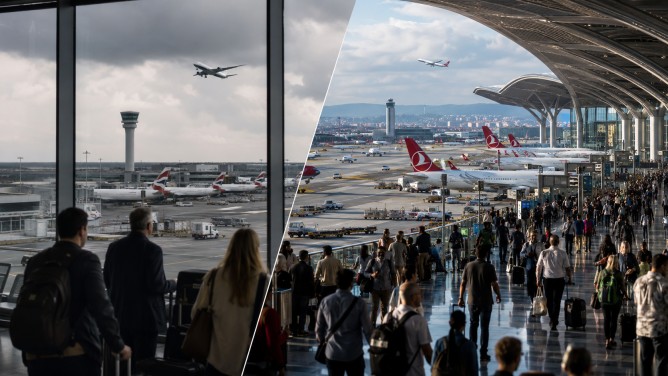
In a significant shift among Europe’s major airports, Istanbul Airport has overtaken Heathrow as the continent’s busiest, with passenger numbers in July surpassing those of its London counterpart. Istanbul Airport managed to handle 8.15 million travelers, eclipsing Heathrow’s total of 7.86 million for the month. This marks a 2.3% increase in traffic for Istanbul compared to the previous year, while Heathrow experienced a 1.5% decline.
The drop in Heathrow’s passenger numbers has been partially attributed to disruptions stemming from the ongoing conflict in the Middle East. This downturn has intensified calls for the UK government to greenlight Heathrow’s proposed third runway, a project that could potentially raise its annual capacity to around 150 million passengers. Currently, Heathrow operates at nearly full capacity with its two runways.
Heathrow officials argue that expanding the airport is crucial for boosting the UK’s international connections, trade, and tourism. The proposed expansion, estimated to cost £33 billion, is seen as essential for maintaining competitiveness in the aviation sector. The latest passenger statistics have served to underscore these points, reinforcing the push for additional capacity.
On the other hand, Istanbul Airport, which began operations in 2018, continues to expand its capabilities. It already boasts a larger site and operates around the clock with three runways, and a fourth is set to open by the end of 2026. This ongoing development highlights Istanbul’s commitment to becoming a leading global hub.
While Heathrow grapples with capacity challenges, other UK airports are experiencing growth. Both London Stansted and Manchester airports reported their busiest July on record, with Stansted handling 3.1 million passengers and Manchester welcoming 3.4 million travelers. These figures reflect a broader trend of increasing air travel across the country, despite the challenges faced by Heathrow.