
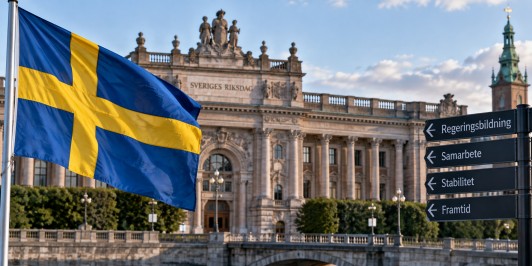
Sweden is in the midst of coalition talks following a tightly contested parliamentary election, with the centre-left bloc led by the Social Democrats currently leading the race to form a new government. With 95% of votes counted, the centre-left has secured 176 seats, narrowly ahead of the 173 seats won by the right-leaning bloc. The final results will be confirmed once overseas ballots are tallied later in the week.
Social Democrat leader Magdalena Andersson has initiated discussions on potential coalition partnerships to return to power, while outgoing Prime Minister Ulf Kristersson and his centre-right allies are also strategizing to maintain their government. The slim margin has added a layer of complexity to the composition of the future government. Notably, the Centre Party is expected to play a pivotal role in the negotiations, although there are disagreements over its potential cooperation with the Left Party.
The Centre Party has emphasized the need for a stable government with a clear centre-right orientation, ruling out alliances with what it deems as fringe political forces. Conversely, several left-leaning parties have urged for a government change, cautioning that a prolonged political stalemate could trigger another election. Meanwhile, the Sweden Democrats, who previously supported the outgoing right-wing government, experienced a decline in support and are unlikely to be part of the upcoming government, although their stances on immigration, integration, and crime continue to influence mainstream political discussions.
Kristersson is keeping his options open as the final election results are awaited. The Moderates and their allies face the challenge of establishing a viable parliamentary majority, with the Liberals and Christian Democrats excluding any collaboration with the Social Democrats. The new parliament is set to convene on September 28, and the earliest possible vote for a prime minister could occur the following day. Should attempts to appoint a prime minister fail repeatedly, Sweden may face the prospect of another election.
Coalition negotiations could extend over several weeks or even months. After the 2022 election, it took 37 days to form a government, while the 2018 election resulted in 134 days of talks. In the current scenario, with neither bloc holding a decisive majority, the roles of the Centre and Left parties could be crucial in determining who will lead Sweden’s next government.