
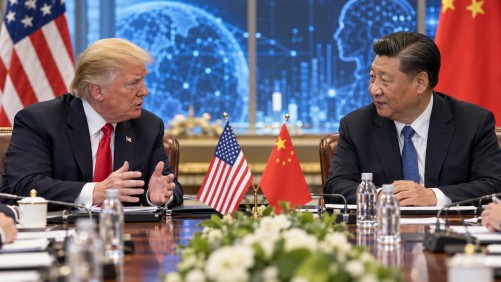
During a summit on September 25, U.S. President Donald Trump and Chinese President Xi Jinping addressed the ongoing Middle East conflict, as Iran urged the United States to consider a seven-day plan proposed to alleviate regional tensions and reopen the Strait of Hormuz. This discussion comes amid heightened concerns over disrupted energy flows and increased hostilities in the Gulf, Yemen, and Lebanon.
President Xi advocated for a return to the framework established in June, which had previously resulted in a temporary ceasefire, and encouraged both the United States and Iran to engage in negotiations for a more comprehensive resolution. Iran has shown support for this approach while simultaneously promoting its own peace initiative.
The Iranian proposal, articulated by Foreign Minister Abbas Araqchi, suggests that the Strait of Hormuz could be reopened, and maritime traffic normalized within a week if the United States agrees to the plan. The proposal also demands an end to hostilities, the lifting of the U.S. blockade on Iranian ports, the release of frozen Iranian assets, and the removal of sanctions on oil.
While the United States has not publicly committed to the Iranian plan, officials have noted that ongoing discussions through mediators remain constructive, especially regarding nuclear issues. However, Iran remains firm on its stance regarding its nuclear program, refusing to make concessions, particularly on uranium enrichment.
During the summit, President Trump cautioned President Xi against providing any form of support to Iran, whether direct or indirect. U.S. Ambassador to China David Perdue later affirmed that China had assured the U.S. that it was not aiding Iran.
In the backdrop of these diplomatic efforts, regional powers such as Saudi Arabia, Pakistan, and Turkey have been exploring enhanced military and intelligence cooperation to address the expanding security challenges in the region.